Shelving for Small Apartments
Shelving in a small apartment comes down to three practical questions: Do you have wall space you can drill into? Do you have floor space you can give up? And are you trying to fill an awkward corner? Each answer points to a different shelving type.
Floating shelves mount to the wall and use zero floor space — ideal when square footage is tight but you have bare wall area. The tradeoff is drilling: you need anchors, and you will patch holes when you move. Bookshelves are freestanding, so they work for renters and require no wall modification, but they claim floor area and depth in rooms that may already feel crowded. Corner shelves target dead space — the 90-degree corners that other furniture cannot reach — but the footprint and how far the unit projects still matter in a small layout.
The three guides below cover each type with exact dimensions, honest tradeoffs, and specific product picks.
How to Choose
Start with the constraint, not the product. The fastest way to narrow your options is to identify what is actually limiting you.
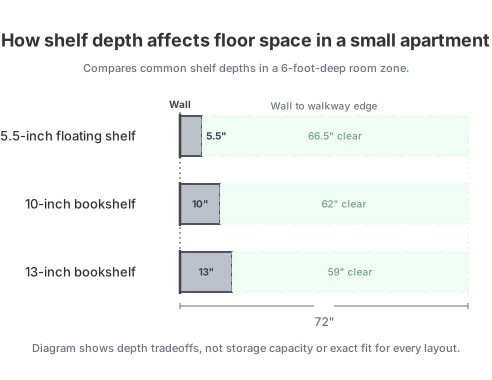
"I have no floor space to spare." Wall-mounted floating shelves are the answer. They project only 5–6 inches from the wall and claim zero floor area. You need bare wall space and the willingness to drill. See the floating shelves guide.
"I cannot (or prefer not to) drill into walls." A freestanding bookshelf requires no wall modification. Narrow models (8–12 inches deep) fit along walls or beside furniture. Taller, slimmer profiles like ladder shelves use less floor area than wide, short ones. See the bookshelves guide.
"I have an empty corner doing nothing." Corner shelves are designed for the 90-degree dead zones that rectangular furniture wastes. Both freestanding and wall-mounted options exist, so you can pick based on renter-friendliness. See the corner shelves guide.
"I need the most total storage." A freestanding bookshelf almost always wins on raw capacity. Floating shelves are better at adding a little storage in a lot of places — above desks, beside doorframes, in hallways — rather than concentrating it in one spot.
Before buying anything, measure. For wall-mounted shelves: the clear width between obstacles and the depth you can tolerate projecting into the room. For freestanding shelves: the footprint on the floor and the ceiling height if you are considering a tall unit.
Guides
Best Narrow Bookshelf with Drawers for Small Apartments
Narrow bookshelves pair open shelves with drawers; compare measured footprints, concealed storage, and anchoring needs.
Best Floating Shelves for Small Apartments
Wall-mounted, zero floor footprint. Compact sets, long display shelves, and premium options from $12 to $229. Requires drilling — renter tradeoffs covered honestly.
Best Bookshelves for Small Apartments
Freestanding, no drilling required. Narrow towers, ladder shelves, and rotating bookcases from $35 to $100. Best option when you need real storage capacity.
Best Corner Shelves for Small Apartments
Built for 90-degree dead zones. Freestanding and wall-mounted options from $30 to $50, with triangular and fan-shaped footprints compared side by side.
FAQ
- Are floating shelves worth it in a small apartment?
- Yes, if you are comfortable with wall mounting. Floating shelves use zero floor space and can add storage to walls that are otherwise doing nothing. The tradeoff is drilling — every floating shelf requires some form of wall anchor, so plan on patching holes when you move.
- What type of shelving is best for renters?
- Freestanding shelving is the easiest for renters because it requires no wall modifications. Bookshelves, corner shelves, and rolling carts all work without drilling. Floating shelves are still an option if your landlord allows small nail holes or you are willing to patch on move-out.
- How do I choose between a bookshelf and floating shelves?
- Choose floating shelves when floor space is the bigger constraint and you have usable wall area. Choose a bookshelf when you need more total storage capacity, want something freestanding, or prefer not to drill into walls. In many small apartments, using both — a bookshelf in one room and floating shelves in another — gives the best coverage.