Storage & Organization for Small Apartments
Small apartment storage is rarely about buying one big shelf and calling it done. The typical apartment has wasted space in at least three places — the backs of doors, the area under the bed, and the vertical wall space above furniture — and addressing those gaps usually does more than adding another piece of furniture to the floor. These guides cover both room-level storage (shelves, carts, under-bed bins, wall-mounted options) and closet-specific solutions (hangers, hanging shelves, over-door organizers, freestanding wardrobes). The goal is to help you figure out where your unused space actually is and what fits there without making the apartment feel more crowded.
How to Choose
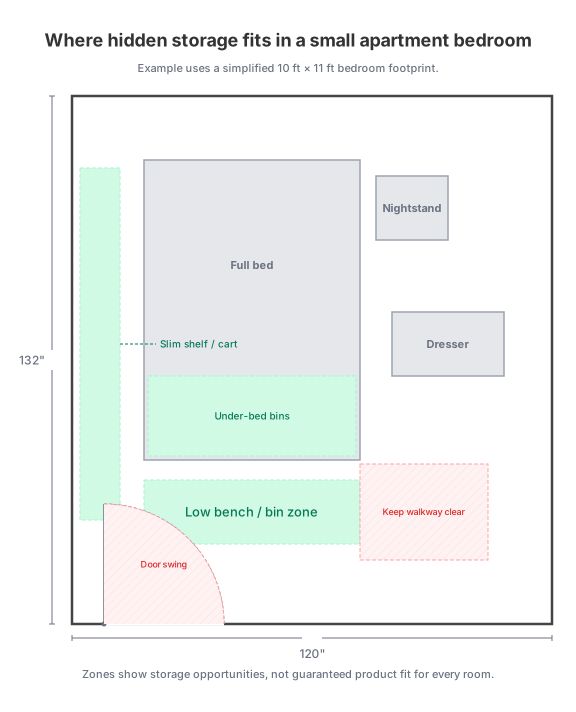
Before you buy anything, take stock of the space you already have. Measure the back of your closet door (most are 80 inches tall and completely unused), check under your bed (anything over 5 inches of clearance can hold flat storage bins), and look at the walls above your desk, dresser, or door frames. If those areas are empty, they can absorb a surprising amount of clutter without adding any new furniture to the floor.
When you do need freestanding storage, depth is the dimension that matters most. A 12-inch-deep shelf sits almost flush against a wall and keeps walkways clear. An 18-inch-deep unit starts to compete with furniture for floor space, and in a hallway or galley kitchen, even a few extra inches can make the room feel impassable. Weight capacity is the other number to check — in a small apartment, you end up consolidating more items onto fewer shelves, and a shelf rated for 20 pounds per tier fills up fast once you add books or kitchen supplies.
The renter-friendly question shapes everything. Wall-mounted shelves require drilling into studs, which means landlord approval and repair costs when you move. Over-door hooks and organizers, freestanding shelving, under-bed containers, and closet rod accessories all install without tools and leave no damage. If your lease restricts wall modifications, that immediately narrows your options — but the remaining options still cover most storage needs.
Guides
Best Storage Ottomans for Small Apartments
Hidden-storage ottomans that earn their footprint — folding benches, round footstools, and lift-top cubes, with exact dimensions and renter-friendly picks.
Best Storage Cabinets for Small Apartments
Freestanding cabinets that store vertically without eating floor space — shallow laminate, low console, steel locker, and a deeper premium pick.
Best Entryway Storage for Small Apartments
Depth-first entryway storage for renters — hall trees, hidden-storage benches, and a 9.4-inch console that hug the wall without blocking a narrow hall.
Best Storage Solutions for Small Apartments
Covers five types of room-level storage: freestanding shelves, rolling carts, under-bed containers, over-door organizers, and wall-mounted shelves. Start here if you need more storage in a bedroom, kitchen, bathroom, or living area.
Best Closet Organizers for Small Apartments
Focused on maximizing a small apartment closet — over-door pocket organizers, hanging shelf inserts, slim hangers that recover rod space, and freestanding wardrobe options for apartments with no closet at all.
Best Bathroom Storage for Small Apartments
Over-toilet shelving, tension shower caddies, narrow rolling carts, and countertop organizers for apartment bathrooms where every inch counts.
Best Kitchen Storage for Small Apartments
Rolling kitchen carts, slim gap carts, magnetic spice racks, and over-sink organizers for apartment kitchens where counter and floor space are limited.
Best Shoe Storage for Small Apartments
Over-door organizers, slim shoe racks, shoe benches, flip-drawer cabinets, and vertical towers for small apartment entryways. All freestanding or over-door — no drilling required.
Best Laundry Storage for Small Apartments
Slim washer/dryer gap carts, no-drill over-appliance shelves, folding drying racks, and rolling sorters — all freestanding and renter-friendly.
FAQ
- Can I add storage to my apartment without drilling into walls?
- Yes. Over-door organizers hook over any standard door without hardware. Freestanding shelves and rolling carts sit on the floor and can be moved freely. Under-bed storage bins slide under most bed frames with 5+ inches of clearance. Hanging shelf inserts drop onto a closet rod with no tools. The only category that requires drilling is wall-mounted shelves, which need to anchor into studs to hold weight safely.
- Where should I add storage first in a small apartment?
- Start with the spaces you are not using at all. The back of your closet door, the area under your bed, and the vertical wall space above existing furniture are the three most commonly wasted areas in a small apartment. Adding storage to those spots first means you are not giving up any additional floor space. Only add freestanding furniture to the floor once you have exhausted the hidden spaces.
- How much weight can apartment shelving realistically hold?
- It varies widely. Lightweight wire or fabric shelving units may hold 10–20 pounds per shelf, which is fine for towels and toiletries but not for books or kitchen supplies. Metal shelving rated for 50–100+ pounds per tier handles heavier items without sagging. Always check the per-shelf weight rating rather than the total unit capacity, since the total is often spread across multiple tiers.
- Should I organize my closet or add freestanding storage to the room?
- Organize the closet first. Most small apartment closets have recoverable space — switching to slim hangers, adding an over-door organizer, or hanging a shelf insert can significantly increase capacity without taking any floor space. If your closet is truly maxed out or your apartment does not have one, then freestanding storage makes sense as a second step.